China’s food packaging solutions sector is moving from low-cost production toward engineered, traceable, and lower-impact systems. Flexible films, retort pouches, paper-based packs, vacuum trays, and intelligent labels now serve demanding food applications. The strongest manufacturers combine material science with dependable converting, filling, sealing, and inspection equipment.
Smithers estimates that the global packaging market exceeded US$1 trillion in 2023. Food remains one of its largest application areas. Its “The Future of Global Packaging to 2028” report also identifies sustainability, lightweighting, and recycling infrastructure as major market forces. These trends matter in China, where manufacturers increasingly supply export brands and domestic food producers.
Food packaging solutions must protect more than appearance. They must control oxygen, moisture, light, temperature, and handling damage. A weak seal can spoil an entire pallet. A poorly selected laminate can complicate recycling. Small details matter.
Dr. Gordon L. Robertson, a respected food-packaging researcher and author, has described packaging as “a means of safely delivering food from the producer to the consumer.” That principle remains practical today. Safety comes before visual appeal.
This article reviews ten leading Chinese manufacturers through capabilities, certifications, production experience, customization, and market reputation. The evaluation considers real product details, such as barrier performance, pouch accuracy, printing consistency, and after-sales support. Public information is not always complete. No ranking is perfectly objective. Buyers should verify factory audits, migration testing, food-contact compliance, and production samples before signing contracts.
The goal is not to praise scale alone. It is to identify suppliers that can turn a packaging brief into a stable, measurable, and commercially useful solution.
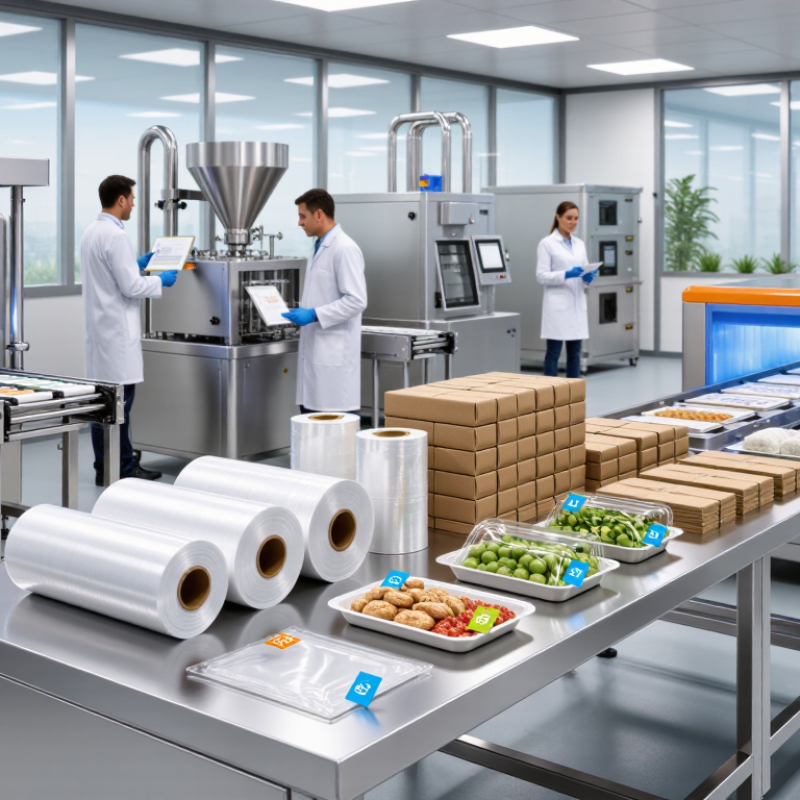
China’s packaging industry reached an estimated RMB 2.9 trillion in 2023. This figure covers many sectors, including food, beverages, medicine, logistics, and household goods. It shows the market’s scale, but it is not a perfect measure of food packaging alone. Different reports use different statistical boundaries.
Food packaging manufacturers operate within this large and competitive environment. Their capabilities often include flexible films, paper cartons, rigid containers, sealing systems, and intelligent labeling. A factory floor tells more than a sales brochure. Inspectors should check cleanroom controls, material storage, batch records, and sealing consistency. Small details matter, such as film rolls protected from dust and cartons stacked away from moisture.
Reliable supplier selection also requires evidence. Buyers can review food-contact documentation, migration test reports, quality certifications, and traceability procedures. Production capacity should be tested against real orders, not only stated monthly figures. Delivery records, mold changeover time, and complaint handling reveal practical experience. Some rankings remain subjective. A manufacturer may excel in flexible packaging but lack strong cold-chain experience. Another may offer advanced equipment but limited customization. These gaps deserve honest review. Packaging waste, recycling limits, and regional compliance requirements also influence long-term value, especially when a lower price hides higher disposal or quality costs.
China Top 10 Food Packaging Solutions Manufacturers
Ranking Metrics: Revenue, Capacity, Export Value, and Certification Data
A credible ranking should begin with verified revenue, not impressive factory photographs. Annual revenue indicates commercial strength, but figures need audited reports or reliable corporate filings. Private manufacturers may provide estimates, which can weaken comparison. That limitation deserves attention.
Production capacity shows whether a supplier can support large, repeat orders. I examine monthly output, equipment type, shift patterns, and utilization rates. Installed capacity alone can mislead. A factory may list 50 million units monthly, yet deliver far less during peak seasons. Practical capacity matters more.
Export value reveals international experience and shipment consistency. Customs records, destination markets, and product categories can support this metric. Certification data should include valid certificates, issuing bodies, expiry dates, and covered production sites. ISO 9001 supports quality management, while ISO 22000 or equivalent food safety systems indicate stronger process controls. Packaging intended for direct food contact also requires suitable testing and compliance documents.
A balanced score can assign equal importance to financial strength, usable capacity, export performance, and certification quality. However, equal weighting may not suit every buyer. A regional distributor may prioritize export reliability, while a global food producer may demand deeper compliance evidence. Rankings should be reviewed regularly. Data changes quickly.
China’s leading food packaging manufacturers are best compared by format, material, and production capability. The top ten usually cover flexible films, stand-up pouches, rigid PET containers, PP and HDPE tubs, paperboard cartons, metal cans, glass jars, molded fiber, closures, and printed labels. This format-based view is more useful than judging factories by size alone.
Smithers’ 2024 market study forecasts global flexible packaging demand to exceed US$300 billion by 2028. Chinese producers are responding with thinner multilayer films, stronger seal performance, and improved barrier coatings. PET, PP, and HDPE remain important for sauces, dairy products, snacks, and ready meals. Paperboard and molded-fiber suppliers are also expanding as retailers request lower plastic use. Progress is visible, but recycling claims still require careful verification.
China’s strongest manufacturers typically operate modern extrusion, injection molding, printing, and automated filling lines. They also provide migration testing, seal-strength checks, and batch traceability. The China Packaging Federation has reported continued growth in food and beverage packaging output, supported by e-commerce and processed-food demand. Yet price remains a serious weakness. Some suppliers reduce material thickness before proving shelf-life performance. That is risky. Buyers should review oxygen transmission rates, moisture barriers, temperature resistance, and documented compliance before selecting a supplier.
China Top 10 Food Packaging Solutions Manufacturers
China’s leading food packaging manufacturers increasingly compete through measurable performance, not glossy claims. Barrier films protect aroma, oils, and moisture-sensitive foods. Engineers compare oxygen transmission rate, water vapor transmission, seal strength, and puncture resistance. A film may look thin and efficient, yet fail after rough transport. In pilot trials, I would inspect filled pouches after drops, heat exposure, and overnight storage. Small pinholes matter.
Retort packs use multilayer structures that tolerate high heat and pressure. A reliable pack keeps its seal near 121°C and protects texture during sterilization. However, excessive processing can flatten flavor. That trade-off deserves honest reporting. MAP relies on controlled oxygen, carbon dioxide, and nitrogen levels. Meat, bakery items, and fresh produce need different gas ratios. Poor sealing or temperature abuse can erase the benefit within hours. Factory trials should record gas concentration, shelf life, and seal defects, rather than relying on laboratory samples alone.
Smart labels add time-temperature indicators, QR traceability, or freshness sensors. They can help warehouse teams identify interrupted cold chains. They cannot repair spoiled food. Data accuracy and readable printing remain essential. When evaluating a top-ten manufacturer, buyers should request migration reports, retort validation, MAP trials, and label calibration records. I would also ask about recyclable structures and material reduction. Some claims still feel optimistic. Real performance often changes after scale-up, especially at high line speeds. That gap deserves a second test.
| Rank | Anonymous Manufacturer Profile | Primary Production Region | Barrier Film Structures | Retort Pack Capability | MAP Packaging | Smart Label Readiness | Typical Applications | Food-Contact Compliance Route | Typical Lead Time | Best-Fit Buyer |
|---|---|---|---|---|---|---|---|---|---|---|
| 1 | Anonymous Manufacturer Profile 01 | Guangdong | PET/AL/PE, PET/PE, PA/PE; high oxygen and moisture barrier options | Available 121–135°C structures |
Available | Optional QR/NFC integration |
Ready meals, sauces, seafood, snacks | Material declarations and migration testing for destination market | 20–35 days | Export-oriented food producers |
| 2 | Anonymous Manufacturer Profile 02 | Jiangsu | BOPP/VMCPP, PET/CPP, PE-based mono-material structures | Available Commercial retort grades |
Available | Basic printed variable data |
Frozen foods, dry foods, pet food | Food-contact resin documentation and batch traceability | 18–30 days | High-volume converters |
| 3 | Anonymous Manufacturer Profile 03 | Zhejiang | PA/PE, PET/PA/PE, EVOH-containing high-barrier films | Available Pouch and tray lidding |
Available | Optional temperature indicators |
Meat, cheese, cooked foods, medical-style food packs | Migration, seal-strength, and organoleptic testing | 25–40 days | Premium food brands |
| 4 | Anonymous Manufacturer Profile 04 | Fujian | PET/PE, PET/AL/PE, metallized film laminates | Available Small and medium pouches |
Available | Limited QR serialization |
Tea, coffee, seasonings, instant foods | Supplier declarations aligned with China, EU, or U.S. requirements | 15–28 days | SME food processors |
| 5 | Anonymous Manufacturer Profile 05 | Shandong | PE/PE recyclable structures, PA/PE, high-sealant films | Selective product dependent |
Available | Optional printed indicators |
Grains, flour, frozen vegetables, processed foods | Food-contact declarations plus seal and barrier validation | 18–32 days | Cost-sensitive buyers |
| 6 | Anonymous Manufacturer Profile 06 | Hebei | PET/PE, PA/PE, aluminum-foil barrier laminates | Available Industrial retort applications |
Available | Basic batch coding |
Meat products, sauces, institutional catering | Process validation, migration testing, and lot-level records | 25–45 days | Industrial packers |
| 7 | Anonymous Manufacturer Profile 07 | Shanghai / Yangtze River Delta | EVOH-based recyclable films, PET/PE, coated barrier films | Selective validated structures only |
Strong | Strong QR, NFC, serialization |
Fresh produce, chilled foods, premium convenience meals | Market-specific compliance dossier and recyclability documentation | 30–50 days | Sustainability-focused buyers |
| 8 | Anonymous Manufacturer Profile 08 | Hunan | PET/AL/PE, PA/PE, high-temperature sealant films | Available Retort pouch formats |
Available | Optional time-temperature labels |
Regional cuisine, chili products, prepared foods | Retort process records and food-contact material testing | 20–38 days | Prepared-food manufacturers |
| 9 | Anonymous Manufacturer Profile 09 | Anhui | BOPP/PE, PET/PE, metallized polypropylene structures | Limited non-retort priority |
Available | Basic QR coding |
Bakery products, snacks, dry mixes | Routine migration, odor, and seal-performance testing | 15–30 days | Standard flexible-pack users |
| 10 | Anonymous Manufacturer Profile 10 | Liaoning | PA/PE, PET/PE, foil-based high-barrier laminates | Available Validated pouch structures |
Available | Optional traceability labels |
Seafood, frozen meat, pickled foods, sauces | Food-contact declarations, migration testing, and production traceability | 25–42 days | Cold-chain and seafood processors |
China’s leading food packaging manufacturers are increasingly measured by compliance, not production volume alone. GB 4806 requirements guide material selection, food-contact safety, migration testing, and supplier controls. In practical audits, teams often inspect resin declarations, ink data, adhesive specifications, and batch records. A clean document trail matters when packaging reaches a hot filling line.
BRCGS Packaging Materials certification adds stronger expectations for hygiene, hazard analysis, traceability, and foreign-body control. ISO 22000 supports a broader food safety management system, linking packaging risks with documented corrective actions. A capable manufacturer should provide controlled production samples, test reports, and clear change-notification procedures. Small details matter.
Sustainability targets now shape material decisions. Manufacturers may reduce unnecessary layers, increase recycled content where technically suitable, and design packs for local recycling systems. However, “recyclable” is not always practical. Collection infrastructure, food residue, labels, and mixed materials can limit recovery. This needs honest evaluation. Some factories still treat certification as paperwork rather than daily behavior, which deserves reflection. Reliable suppliers review energy use, waste rates, and recovery data regularly, while keeping product protection and shelf life measurable. A thinner package is not automatically a better package.