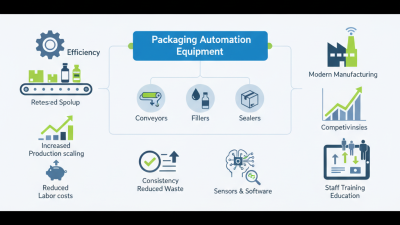
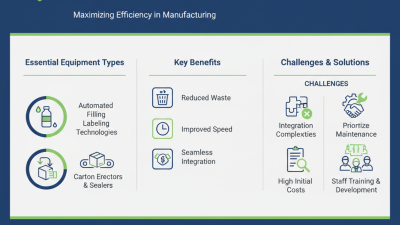
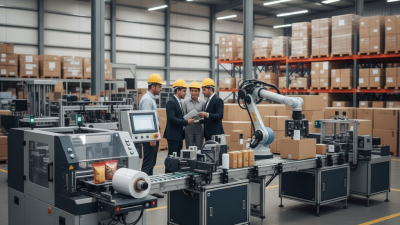
Choosing among the top packaging equipment suppliers requires more than comparing machine prices. A capable supplier should understand production realities, including product sensitivity, line speed, cleaning routines, changeover time, and operator training. Filling, labeling, cartoning, wrapping, inspection, and palletizing equipment must work as one reliable system. A polished brochure proves little.
PMMI President and CEO Jim Pittas has said, “Automation is not just about replacing people; it is about augmenting people.” This view helps explain today’s packaging equipment market. The strongest suppliers support workers with safer controls, clearer data, faster adjustments, and practical maintenance tools. They also provide testing, integration, spare parts, and responsive technical service. Those details matter when a conveyor stops during a busy shift.
No supplier is perfect. That deserves honest attention. One company may offer excellent robotics but weak local support. Another may provide strong sanitation design yet require a larger investment. Buyers should examine total cost, installation records, energy use, software compatibility, and documented customer results. Factory visits can reveal useful details, such as exposed wiring, difficult washdown areas, or awkward access around change parts.
This guide compares leading packaging equipment suppliers through performance, expertise, innovation, service coverage, and long-term value. It does not treat market reputation as proof. Real conditions differ. A beverage producer, pharmaceutical manufacturer, and snack company may need completely different solutions. The best choice is usually the supplier that listens carefully, tests honestly, and improves the line without creating unnecessary complexity.
Packaging equipment suppliers do more than deliver machines. They help manufacturers connect equipment with real production needs. Their role begins with understanding products, packaging materials, line speed, and available floor space. A reliable supplier asks about carton sizes, seal temperatures, changeover frequency, and operator skills. Not just selling machines.
Technical expertise matters during selection and installation. Suppliers should explain machine limits in clear, measurable terms. They may test sample materials, adjust filling accuracy, and check conveyor alignment before delivery. During commissioning, trained technicians should verify safety guards, sensor settings, and emergency stops. Operators also need practical training, not a thick manual alone. Small details matter.
The best suppliers support the equipment throughout its working life. They provide maintenance schedules, spare-part guidance, troubleshooting records, and responsive technical communication. A useful service agreement should identify response times and routine inspection tasks. Still, no recommendation is perfect. A machine that performs well during testing may struggle after material changes or seasonal demand increases. Production teams must review performance data and question optimistic promises. That discipline makes the supplier a technical partner, rather than simply an equipment seller.
The strongest supplier is not always the one offering the lowest machine price. Compare total cost of ownership, including installation, energy use, spare parts, training, and downtime. A practical test is a sample run with your actual film, cartons, labels, and product sizes. Watch the changeover closely. A machine that needs 45 minutes between formats may quietly erase its purchase savings.
According to PMMI’s 2024 State of the Industry report, labor shortages and automation remain major investment drivers in packaging operations. Supplier evaluations should therefore measure usable automation, not impressive demonstrations. Ask for documented output, reject rates, Overall Equipment Effectiveness, and maintenance response times from comparable installations. The International Federation of Robotics reported 541,302 industrial robots were installed worldwide in 2023. That figure shows automation is expanding, but it does not prove every packaging line needs robotics.
Technical compatibility also matters. Check whether the equipment supports common industrial communication standards, production-data exports, remote diagnostics, and future sensor upgrades. Review guarding, emergency stops, hygienic design, and relevant conformity documentation with qualified specialists. Service coverage needs detail: local technicians, critical spare-part availability, and guaranteed response windows.
Some comparisons remain imperfect. Suppliers may calculate efficiency under different product conditions. Request raw test assumptions. Also, do not accept projected payback without seasonal volumes and actual labor costs. A clear scoring sheet can expose weak claims: 30% reliability, 25% service, 20% integration, 15% safety, and 10% purchase price. Adjust those weights when your operation has unusual risks.
What Are the Top Packaging Equipment Suppliers?
Leading suppliers differ by packaging machinery category, not just company size. Form-fill-seal specialists support flexible pouches, sachets, and high-speed filling lines. Cartoning suppliers focus on precise carton forming, loading, and closing. Case-packing suppliers handle heavier secondary packaging, while labeling and coding specialists protect traceability at the final inspection point. End-of-line suppliers integrate conveyors, palletizing, and stretch wrapping into one controlled flow.
Demand remains substantial. PMMI’s 2024 State of the Industry report valued U.S. packaging machinery shipments at about $10.2 billion in 2023. Grand View Research estimated the global packaging machinery market at more than $50 billion in 2023. These figures explain the crowded supplier landscape, but they do not identify the best technical fit. A supplier’s performance depends on product shape, film behavior, line speed, changeover frequency, and available floor space.
In practice, I would test each category separately. Ask a form-fill-seal supplier for seal-strength data using your actual film. Request a cartoning supplier to demonstrate tool-less changeovers. For case packing, measure damaged cartons after extended operation, not during a short showroom trial. Inspection suppliers should document false rejects and detection limits. Service response also matters. A fast machine with weak local support can become an expensive bottleneck. Reported uptime is often optimistic. I would verify it through customer references, maintenance records, and a supervised factory acceptance test. No shortlist is perfect.
| Packaging Machinery Category | Typical Equipment | Primary Application | Common Packaging Materials | Typical Production Range | Important Supplier Capabilities | Key Selection Criteria |
|---|---|---|---|---|---|---|
| Filling Equipment | Liquid fillers, powder fillers, auger fillers, piston fillers, and volumetric fillers | Accurately dispensing products into bottles, jars, pouches, cans, or trays | Plastic, glass, metal, laminated film, and rigid containers | Approximately 10–600 containers per minute, depending on product and machine configuration | Product-specific dosing systems, clean-in-place options, recipe control, and integration with upstream and downstream equipment | Fill accuracy, product viscosity, changeover time, hygiene requirements, and container compatibility |
| Form-Fill-Seal Machines | Vertical form-fill-seal and horizontal form-fill-seal systems | Forming bags or pouches, filling them, and sealing them in one continuous process | Polyethylene, polypropylene, laminates, paper-based films, and recyclable flexible films | Approximately 20–250 packages per minute, depending on format and product | Servo-driven motion, multi-lane configurations, modified-atmosphere packaging, and film-registration control | Bag format, sealing performance, film behavior, speed, product handling, and waste reduction |
| Cartoning Equipment | Horizontal cartoners, vertical cartoners, and continuous-motion cartoners | Loading products into pre-formed cartons and closing or sealing the cartons | Folding carton board, paperboard, inserts, and printed cartons | Approximately 30–400 cartons per minute | Automatic product feeding, leaflet insertion, serialization interfaces, and quick-change tooling | Carton dimensions, product orientation, loading reliability, line speed, and changeover flexibility |
| Case Packing and Tray Packing | Wraparound case packers, wrap-around tray packers, and robotic case packers | Grouping primary packages into shipping cases, trays, or retail-ready packs | Corrugated board, paperboard, shrink film, and rigid transport containers | Approximately 10–120 cases per minute, depending on case pattern and product type | Robotic pick-and-place, case forming, glue or tape sealing, and automated pattern changeover | Pack pattern flexibility, product stability, case strength, footprint, and integration with palletizing |
| Wrapping and Bundling Equipment | Flow wrappers, shrink wrappers, stretch wrappers, and multipack bundlers | Wrapping individual products or grouping multiple units for retail and transport protection | Polyolefin, polyethylene, polypropylene, stretch film, and paper-based wrapping materials | Approximately 20–300 packages per minute for primary or multipack applications | Film-tension control, sealing-jaw technology, print registration, and automated film splicing | Seal quality, film consumption, product dimensions, pack appearance, and heat sensitivity |
| Labeling and Coding Systems | Pressure-sensitive labelers, sleeve labelers, wraparound labelers, inkjet coders, and laser coders | Applying labels and printing batch codes, dates, barcodes, and traceability information | Paper labels, synthetic labels, shrink sleeves, cartons, glass, metal, and plastic containers | Approximately 30–1,000 containers per minute, depending on application and inspection requirements | Vision inspection, barcode verification, reject systems, serialization support, and production-data connectivity | Application accuracy, code readability, substrate compatibility, regulatory traceability, and maintenance needs |
| Palletizing and Depalletizing | Robotic palletizers, conventional palletizers, layer palletizers, and depalletizers | Automatically stacking or removing cases, trays, bags, or containers on pallets | Corrugated cases, plastic cases, bags, trays, slip sheets, and pallets | Approximately 10–200 cases per minute, depending on payload and stacking pattern | End-of-arm tooling, pallet-pattern management, safety guarding, layer handling, and warehouse-system interfaces | Payload, reach, pallet formats, floor space, product stability, and required automation level |
| Inspection and Checkweighing | Checkweighers, metal detectors, X-ray systems, vision systems, and seal inspection systems | Detecting weight variation, foreign material, packaging defects, and labeling errors | Packaged food, pharmaceuticals, beverages, personal-care products, and industrial goods | Approximately 60–600 packages per minute, depending on product and inspection technology | Automatic rejection, audit trails, statistical process control, data export, and hygienic designs | Detection sensitivity, accuracy, compliance requirements, product effect, and false-reject rate |
| Pouch and Sachet Packaging | Premade-pouch machines, stick-pack machines, sachet machines, and spouted-pouch fillers | Producing single-serve, refill, sample, and flexible pouch formats | Laminated films, monomaterial films, foil laminates, and spouted-pouch structures | Approximately 20–1,200 pouches per minute, depending on the number of lanes and format | Multi-lane production, zipper or spout insertion, gas flushing, tear-notch systems, and seal testing | Pouch dimensions, seal integrity, dosing accuracy, material structure, and format changeover |
| End-of-Line Packaging Integration | Integrated conveyors, accumulation systems, case packing, palletizing, wrapping, and line-control software | Connecting multiple packaging stages into a coordinated automated production line | Primary packs, secondary cartons, corrugated cases, stretch film, and pallets | Line speeds commonly range from 30 to more than 500 primary packages per minute | Turnkey engineering, line balancing, robotic automation, safety systems, remote diagnostics, and operator training | Overall equipment effectiveness, compatibility, commissioning support, scalability, service coverage, and total cost of ownership |
Note: Production ranges are representative industry ranges and vary according to product characteristics, package size, machine configuration, automation level, and operating conditions.
What Are the Top Packaging Equipment Suppliers?
Industry Sectors Served by Top Packaging Equipment Providers
Top packaging equipment providers increasingly serve several industries, not one narrow market. Food and beverage remain major users of filling, sealing, labeling, and inspection systems. Smithers’ The Future of Packaging to 2029 reports continued packaging growth, supported by processed foods, delivery services, and consumer convenience. These sectors demand cleanable equipment, rapid format changes, and dependable production records.
Pharmaceutical manufacturers require higher control. Their lines often include serialization-ready inspection, precise dosing, tamper evidence, and validated cleaning procedures. Grand View Research estimates the global packaging machinery market reached approximately $52.8 billion in 2023. Its forecast also indicates steady growth through 2030. That growth reflects investment across healthcare, personal care, and household products, not only food production.
E-commerce has changed equipment priorities. Retailers and fulfillment operators need compact carton forming, right-sized packing, weighing, and automated shipping-label application. Industrial and agricultural companies also use stretch wrapping, bagging, palletizing, and bulk handling systems. PMMI’s 2024 industry research identifies labor availability and automation as continuing concerns for packaging operations. Yet automation is not always the best answer. Small manufacturers may lose flexibility when a complex line requires expensive specialists. Sector experience matters, but supplier claims still need practical testing.
A useful evaluation includes product contact materials, service response times, changeover duration, safety documentation, and integration with existing controls. Ask for recorded performance data. Marketing language can hide difficult maintenance.
Choosing among top packaging equipment suppliers requires more than comparing machine prices. A reliable supplier understands your product, production volume, packaging materials, and workplace conditions. Ask for documented performance data, installation procedures, operator training, and maintenance support. A supplier with practical engineering experience should explain limitations clearly, not promise perfect results.
Review the equipment’s flexibility before signing an agreement. Can it handle different package sizes, speeds, and future product changes? Request a live test using your actual materials. Check seal quality, changeover time, noise levels, energy use, and cleaning access. Independent references can reveal service delays that brochures rarely mention. A polished demonstration may still hide difficult adjustments. This is where careful questioning matters.
Tips: Compare total ownership costs, not only the purchase price. Confirm spare-part availability and response times in writing. Ask who will train your operators. Examine safety documentation and applicable quality requirements. Leave room for uncertainty; early estimates can be too optimistic. A small pilot run may expose problems before they become expensive. Also, involve maintenance staff in the decision. They often notice access issues that management misses.