
What Is Automated Packaging and How Does It Work?
Automated packaging uses machines, sensors, software, and carefully designed workflows to prepare products for shipment. It can fill containers, form cartons, apply labels, seal packages, and move finished units through inspection. Unlike manual packing, the process follows programmed steps with consistent timing and measurable controls. A typical line may include a conveyor, filling machine, checkweigher, sealing unit, barcode scanner, and case packer.
The process begins when products enter the line at a controlled speed. Sensors detect their position, while programmable controls coordinate each machine. A filling system measures the product, and a sealing station closes the package with heat, adhesive, or pressure. Cameras may check labels, package shape, and visible defects. Rejected items move into a separate area for review. Small details matter here. A loose belt or misaligned sensor can create repeated errors within minutes.
Automated packaging is not simply “faster packing.” It is a production system that must balance speed, accuracy, safety, maintenance, and product protection. No system is flawless. Poor setup, unsuitable materials, or weak staff training can reduce its benefits. This guide examines the main equipment, operating stages, advantages, limitations, and practical considerations behind automated packaging. It also considers where human judgment remains essential, especially during changeovers, quality checks, and unexpected stoppages. The goal is a clear, reliable explanation for readers evaluating automation in real manufacturing environments.
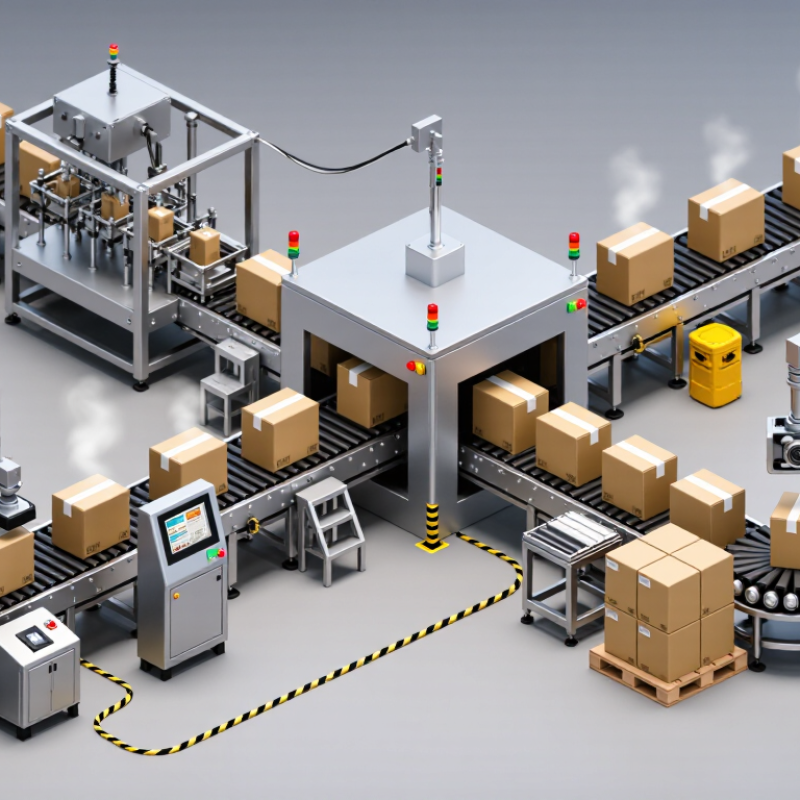
What Automated Packaging Includes: Equipment, Controls, and Market Scope
Automated packaging combines machines, controls, and connected data. Equipment may include depalletizers, conveyors, fillers, sealers, labelers, case packers, and palletizers. Vision cameras inspect print quality. Checkweighers verify product weight. Sensors detect jams, open seals, and missing cartons. These devices support primary, secondary, and tertiary packaging across food, beverage, pharmaceutical, and consumer-goods production.
Controls form the system’s nervous system. A programmable logic controller coordinates timing, while servo drives manage precise movement. Operators adjust recipes through a human-machine interface. Modern lines may connect with SCADA or manufacturing software for downtime, energy, and quality records. Safety interlocks remain essential. A fast line is not useful if changeovers are slow. In practical audits, upstream variation often causes more trouble than the packaging machine itself. That point is easy to miss.
Market scope is expanding, but estimates differ. Mordor Intelligence values the automated packaging machine market at about 52.83 billion dollars in 2024, with a projected 4.93% compound annual growth rate through 2029. The International Federation of Robotics reported 541,302 industrial robots installed worldwide in 2023, across all manufacturing sectors. Packaging is only part of that figure. Still, the direction is clear: labor shortages, traceability demands, and flexible production are encouraging investment. Smaller operations may not need a fully automated line. A semi-automatic cell can sometimes deliver better returns, although that assumption deserves careful measurement.
| Dimension | What It Includes | Typical Equipment, Controls, or Applications | How It Works or What It Measures |
|---|---|---|---|
| Primary packaging | The first package that directly contains the product. | Form-fill-seal machines, bottle fillers, capping machines, pouch machines, tray sealers, and blister-pack equipment. | The machine forms or supplies the package, doses the product, closes or seals it, and checks basic package integrity. |
| Secondary packaging | Packaging that groups individual products for handling, sale, or distribution. | Cartoners, case packers, bundlers, multipackers, and automated labeling or coding systems. | Individual packs are counted, grouped, oriented, inserted into cartons or cases, and identified with printed information. |
| Tertiary packaging | Packaging used to consolidate loads for storage and transportation. | Case erectors, palletizers, stretch wrappers, strappers, pallet conveyors, and robotic handling cells. | Finished cases are arranged into stable pallet patterns, secured, labeled, and transferred to storage or shipping areas. |
| Product feeding and conveying | The movement and presentation of products, containers, cartons, and packaging materials. | Belt conveyors, roller conveyors, vibratory feeders, rotary tables, accumulation conveyors, and pick-and-place units. | Products are spaced, oriented, accumulated, and synchronized with the speed and timing of downstream machines. |
| Filling and dosing | Automatic measurement and dispensing of liquids, powders, granules, or discrete items. | Volumetric fillers, auger fillers, weigh fillers, piston fillers, pumps, and counting systems. | Sensors, timers, flow controls, or weighing devices regulate the target fill quantity and identify underfilled or overfilled packages. |
| Closing and sealing | The process of securing the package after filling. | Heat sealers, induction sealers, capping machines, lidders, gluing systems, and banding equipment. | Temperature, pressure, torque, dwell time, or adhesive application is controlled to produce a consistent closure. |
| Programmable control | The logic that coordinates machine movements and process sequences. | Programmable logic controllers, motion controllers, servo drives, variable-frequency drives, and remote I/O modules. | The control system receives sensor signals, executes programmed logic, adjusts actuators, and synchronizes multiple machine stations. |
| Human-machine interface | The operator interface used for setup, monitoring, troubleshooting, and production reporting. | Touchscreen panels, recipe management, alarm pages, production counters, and maintenance screens. | Operators can select approved product formats, change set points, view alarms, and monitor output without directly controlling each actuator. |
| Inspection and quality control | Automatic verification of package presence, position, code, weight, seal, and appearance. | Photoelectric sensors, checkweighers, barcode readers, vision cameras, metal detectors, and seal inspection systems. | Nonconforming packages are detected and rejected automatically, while inspection results can be recorded for traceability. |
| Safety controls | Hardware and logic designed to reduce risks from moving machinery, heat, pressure, and stored energy. | Emergency-stop devices, guards, interlocks, safety relays or controllers, light curtains, and safe-motion functions. | When a hazardous condition or access event is detected, the system initiates a defined safe stop or prevents the machine from starting. |
| Data and connectivity | Production information exchanged between packaging equipment and plant-level systems. | Industrial networks, machine data collection, supervisory systems, electronic batch records, and manufacturing execution interfaces. | The line can share counts, alarms, downtime events, recipes, quality results, and maintenance information. |
| Performance indicators | Measurements used to evaluate output, availability, quality, and material efficiency. | Units per minute, rejected units, changeover duration, downtime, availability, and overall equipment effectiveness. | Sensors and control software collect operating data so teams can compare actual performance with production targets. |
| Common market sectors | Industries that require repeatable, high-volume, hygienic, traceable, or labor-efficient packaging. | Food and beverages, pharmaceuticals, medical products, personal care, household goods, chemicals, agriculture, and e-commerce fulfillment. | Equipment configuration varies according to product characteristics, hygiene requirements, package format, regulatory controls, and production volume. |
| Typical operating sequence | The coordinated series of actions performed during an automated packaging cycle. | Feed, detect, position, fill or load, close or seal, inspect, reject, label, group, palletize, and record. | Sensors confirm each step before the controller permits the next step, helping maintain synchronization and reduce packaging errors. |
Related Posts
-
How to Improve Efficiency with Packaging Automation Solutions?
-
How to Choose an Automated Packaging System?
-

Why Investing in Food Packaging Equipment is Essential for Your Business Success
-
Why is Packaging Automation Equipment Essential for Modern Industries?
-
What is Packaging Automation Equipment and How Does It Work?
-
What is Packaging Automation Equipment and How Does It Work?