What Are the Best China Packaging Solutions?
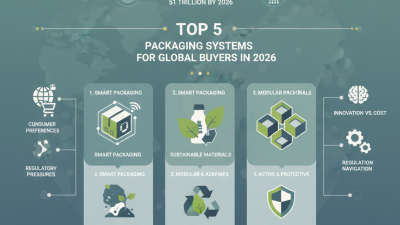
China’s packaging industry is moving beyond attractive boxes and low unit prices. Buyers now assess material efficiency, product protection, recyclability, traceability, and total cost across the supply chain. Smithers’ The Future of Global Packaging to 2028 forecasts continued global growth toward approximately US$1.2 trillion, driven by e-commerce, food safety, healthcare, and emerging markets. This scale makes China packaging solutions important, but size alone does not guarantee quality.
Consider a carton leaving Shenzhen in humid weather. It may face stacking pressure, vibration, temperature changes, and several loading cycles before reaching a customer. Effective packaging solutions must therefore combine verified board strength, moisture control, accurate dimensions, and practical recycling choices. The China Packaging Federation has repeatedly highlighted innovation, green manufacturing, and standardized development as industry priorities. These priorities should be tested through measurable evidence, including compression tests, drop tests, material declarations, and supplier audits.
As Pierre Pienaar, President of the World Packaging Organisation, has stated, “Packaging is not simply a container; it is part of the product experience and supply chain.” That view remains useful. The best China packaging solutions are not always the cheapest or the most visually impressive. They should reduce damage, limit unnecessary material, and support reliable delivery. Sometimes, a simpler design performs better. No solution is perfect. A recyclable package can still fail if it protects the product poorly, while lightweighting can create hidden waste through breakage. The right choice depends on product sensitivity, destination, regulations, machinery, and end-of-life infrastructure. This article examines those trade-offs with practical, evidence-based criteria.

China Packaging Landscape: 132.07 Billion Express Parcels in 2023 (SPB)
China’s express-delivery network handled 132.07 billion parcels in 2023, according to the State Post Bureau (SPB). At that scale, packaging becomes an infrastructure issue, not a minor purchasing detail. Saving a few grams per shipment can add up, while weak cartons may lead to damage, returns, and extra handling. Yet parcel volume alone does not show how much packaging was used or discarded. That distinction matters.
Good packaging starts with the product, delivery route, and handling conditions. A fitted corrugated carton may protect a ceramic cup, while a padded paper mailer may suit a soft garment. Right-sizing reduces empty space and filler. Reliable sealing helps packages withstand conveyor belts and stacking. Recycled-content materials or reusable transport packaging can work well in suitable supply chains, but neither option is automatically better. Moisture exposure, product fragility, and local recovery access all affect performance. Small trials help.
Packaging teams can track damage rates, material weight, packing time, and customer complaints across a representative batch. Measure before changing everything. China’s vast parcel flow highlights an awkward trade-off: lighter packaging may use less material, but insufficient protection can trigger replacement shipments and more waste. The data can guide decisions, though measurement is not always perfect. The best package is not simply the thinnest one. It protects the goods with the least practical amount of material.
Selecting Corrugated, Flexible, Rigid, and Protective Packaging Formats
China packaging decisions start with the journey, not just the product. The State Post Bureau reported 174.5 billion express parcels in China in 2024. That scale makes weight and carton size practical cost factors. Corrugated board suits books, appliances, and mixed-size shipments because inserts can limit movement. But an oversized box still wastes material. Measure the packed item, not only its retail box.
Flexible films and pouches can reduce shipping weight and work well for dry goods or refill formats. Their performance depends on barrier needs, seals, and local collection options. The OECD’s 2022 Global Plastics Outlook estimates that packaging generated about 40% of global plastic waste in 2019. Lighter does not automatically mean easier to recycle. I would check local sorting access before calling a format greener.
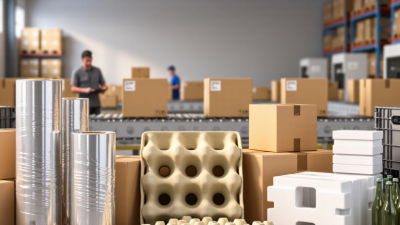
Rigid packaging, such as molded containers or glass, can protect products and support reuse, but adds weight and storage volume. Protective packaging should match the hazard: paper honeycomb for surface separation, molded pulp for shaped items, or corrugated partitions for multiple pieces. Test the actual route. ISTA transport-testing guidance can help assess vibration, drops, and compression. One caveat: lab tests cannot perfectly reproduce every delivery route, so real shipment feedback matters too.
What Are the Best China Packaging Solutions?
A practical comparison of corrugated, flexible, rigid, and protective packaging formats.
Typical capability profile on a qualitative 1–5 scale (1 = lower, 5 = higher). Corrugated packaging is well suited to stacking, flexible packaging can provide strong moisture barriers, rigid formats offer shape retention, and protective packaging is designed to cushion impacts. Actual performance depends on material, design, and product requirements; these ratings are indicative, not laboratory test results.
Material Compliance Under China’s GB 4806 Food-Contact Standards
What Are the Best China Packaging Solutions?
Material Compliance Under China’s GB 4806 Food-Contact Standards
Choosing packaging for the Chinese market means checking more than strength, print quality, and price. Materials intended to contact food must meet applicable requirements in the GB 4806 series. The relevant standard depends on the material, such as plastic, paper, metal, or a coating. Intended use matters too. A pouch for chilled snacks may face different conditions from a container used with hot soup.
Ask suppliers for current compliance documents that identify the exact material and intended use. Then check whether testing reflects real conditions, including contact time, temperature, and food type. Migration results can help assess whether substances transfer into food. A certificate alone is not a complete quality system. Details matter.
Packaging can change during printing, lamination, or sealing. Keep specifications and batch records, and review changes before production. Where the application is unclear, consult a qualified testing laboratory familiar with Chinese food-contact standards. Still, paperwork can look tidier than a real production line. That gap deserves attention. A small mismatch in coating or processing may affect whether test evidence applies to the finished package.
Sustainable Design for China’s 2023 Express-Packaging Reduction Targets
China’s 2023 express-packaging reduction effort starts with a practical design question: can each parcel use less material without compromising protection? The China State Post Bureau’s 2023 Statistical Bulletin recorded 132.07 billion express deliveries, up 19.4% from 2022. That scale matters. A few grams saved per parcel can add up, but only when packaging still prevents damage and returns.
Practical ways to reduce excess packaging
Right-sized cartons, adjustable paper mailers, and fewer empty spaces reduce excess material at the packing bench. Clear sizing rules help workers choose quickly. Small changes count.
Reusable packaging can work well for repeat routes between warehouses, shops, and local delivery hubs. Yet reuse is not automatically greener. Boxes need enough trips to offset cleaning, transport, and replacement. The European Commission’s 2023 packaging proposal highlights prevention, reuse, and recyclability as key design priorities; China’s reduction agenda also emphasizes less excessive packaging and wider reuse.
What to measure
In practice, teams should track material weight, damage rates, and actual reuse cycles, not just the number of reusable boxes purchased.
Paper is not a perfect answer either: coatings and mixed materials can complicate recycling. A modest, measurable redesign may outperform a dramatic change that workers cannot maintain.
Supplier Evaluation Using ISO 9001, ISO 14001, MOQ, and AQL 2.5 Criteria
Choosing a China packaging supplier takes more than comparing unit prices. Ask for current ISO 9001 and ISO 14001 certificates, then confirm the factory, certificate scope, and expiry date. A certificate is useful evidence of a managed system, not proof that every shipment will meet your specification. Request recent inspection records and a sample made with the same board grade, coating, or closure. Small details matter. For environmental claims, check what the supplier actually controls; ISO 14001 does not certify a package as recyclable or low-carbon.
Compare minimum order quantities against setup fees, tooling costs, storage, and expected demand. A low MOQ may raise the unit price, while a large order can leave you with excess stock. Agree in writing on sample size, defect categories, and acceptance numbers under AQL 2.5. This figure is a sampling benchmark, not a promise of zero defects or a precise defect rate in every shipment. For a first order, inspect a production sample and consider an independent check before shipment. I would not rely on a certificate or inspection report alone; both need context, and small suppliers may have uneven records.