
Top 10 Packaging Supplies for Global Buyers
Global buyers rarely choose packaging supplies by appearance alone. A carton may look sturdy, yet collapse under a damp warehouse ceiling. A stretch film may cling well on the first pallet, then loosen during a long trip. These details affect product protection, handling, storage, and cost. They also reveal why buyers need clear specifications, not broad promises.
Steve Jobs, a product-design authority known for his attention to packaging, observed, “Packaging can be theater; it can create a story.” That idea matters, but practical performance matters more. The right choice depends on the product, shipping route, storage conditions, and packing process. Buyers should compare material strength, dimensions, compatibility, and supplier documentation. Small details matter. So does honest testing.
This guide explores ten widely used packaging supplies, including corrugated boxes, cushioning, tapes, stretch films, labels, and protective mailers. Each serves a different purpose. A box that protects glass may waste space around textiles; lightweight mailers may not suit fragile goods. Global sourcing adds further questions about consistent quality, lead times, and clear product specifications. Not every option will fit every shipment. Some decisions remain imperfect, especially when budgets and protection needs compete. Careful sampling and practical trials can help buyers identify reliable options before placing larger orders.
Packaging Supplies and Their Role in Global Trade
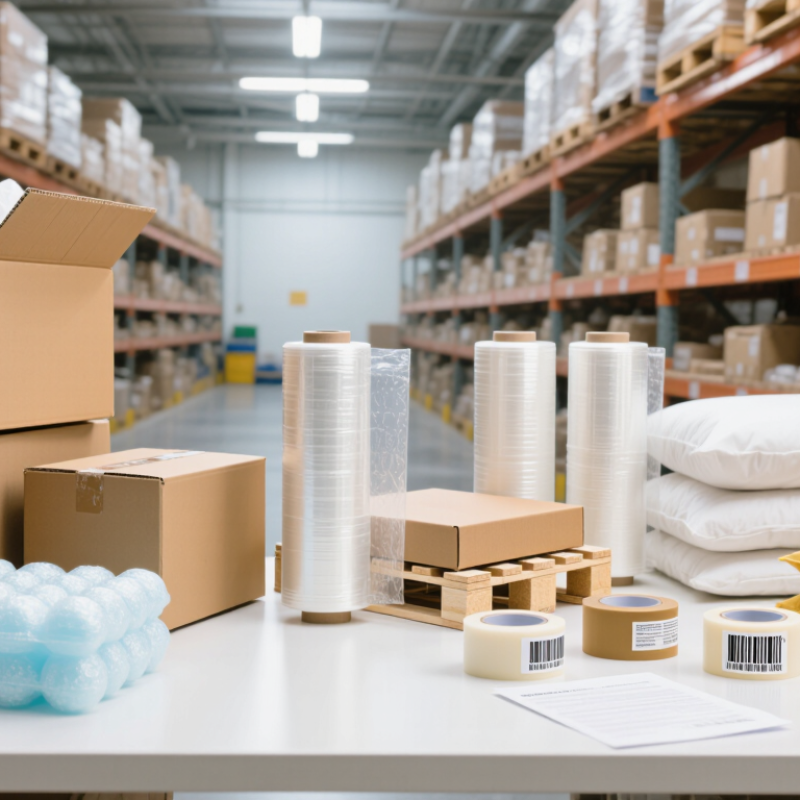
Packaging supplies are not merely containers; they help products survive long journeys and connect sellers with buyers across borders. In global trade, cartons, pallets, cushioning, tape, and protective films must work together through repeated loading, transfers, and changing weather. A double-wall carton may protect ceramic parts, while fitted inserts keep them from striking each other. Small differences matter.
Stretch film secures cartons to pallets, but too much can add waste without improving stability. Clear, readable shipping labels help handlers identify destinations and keep shipments moving. For ocean routes, moisture-resistant liners can reduce condensation damage; for air freight, lighter materials can help control chargeable weight. Good packaging saves trouble.
Yet packaging decisions should reflect product fragility, route length, handling conditions, and destination packaging rules. We sometimes overpack when a simple trial shipment could reveal where protection is actually needed. A practical review includes drop or vibration testing, checking closures, and inspecting cartons after transit. Still, no package is perfect. A dented corner, loose strap, or unreadable label can turn a routine delivery into a delay.
Top 10 Packaging Supplies for Global Buyers - Packaging Supplies and Their Role in Global Trade
| Packaging Supply | Common Materials | Primary Role in Trade | Typical Applications | Key Buyer Considerations |
|---|---|---|---|---|
| Corrugated Boxes | Fluted paperboard with linerboard | Protect goods during storage, handling, and transport; provide stackable outer packaging. | Consumer goods, electronics, food shipments, and e-commerce orders | Box dimensions, board strength, humidity exposure, and local recycling requirements |
| Stretch Film | Linear low-density polyethylene (LLDPE) | Stabilize pallet loads and help protect goods from dust and moisture during transit. | Palletized cartons, appliances, and warehouse shipments | Film thickness, load containment, application method, and recycling access |
| Packaging Tape | Polypropylene or paper backing with pressure-sensitive adhesive | Seal cartons and help keep packages closed through distribution. | Carton sealing, parcel preparation, and bundling | Adhesion to the carton, temperature range, tape width, and compatibility with recycling |
| Wood Pallets | Solid wood or engineered wood components | Support unit loads for forklift handling and movement through freight networks. | Bulk freight, warehouse storage, and containerized cargo | Pallet dimensions, load capacity, repairability, and applicable wood-packaging rules for international shipments |
| Poly Mailers | Polyethylene film, sometimes with a padded lining | Provide lightweight, space-efficient packaging for non-fragile goods. | Apparel, soft goods, and direct-to-consumer parcels | Mailing dimensions, puncture resistance, closure integrity, and destination recycling options |
| Protective Foam | Expanded or flexible plastics, such as polyethylene or polyurethane foam | Cushion products against shock, vibration, and abrasion. | Fragile equipment, instruments, and sensitive components | Cushioning needs, product fit, package volume, and local recovery or disposal options |
| Bubble Cushioning | Air-filled polyethylene film | Provide lightweight cushioning and help limit surface damage in parcel shipments. | Small fragile products, household goods, and electronics accessories | Bubble size, cushioning performance, storage space, and local recycling availability |
| Strapping | Polypropylene, polyester, or steel | Secure bundles and reinforce palletized loads against shifting. | Building materials, heavy cartons, and industrial cargo | Required tensile strength, load type, application equipment, and safe handling practices |
| Desiccants | Silica gel, clay, or other moisture-absorbing materials | Reduce moisture inside enclosed packaging and help limit condensation-related damage. | Electronics, metal parts, and goods shipped in moisture-sensitive conditions | Package volume, expected moisture exposure, handling instructions, and product-specific requirements |
| Shipping Labels | Paper or synthetic face stock with adhesive backing | Display routing, handling, and identification information needed to process shipments. | Cartons, parcels, pallets, and warehouse inventory | Barcode readability, print compatibility, adhesive performance, and destination labeling rules |
Related Posts
-

How to Choose the Best Packaging Supplies for Your Business Needs?
-

What is the Best Packaging Supplies for Global Buyers?
-
Best Packaging Supplies for 2026 What to Choose?
-
Top 10 Essential Packaging Supplies for Global Buyers?
-
2026 Best Packaging Solutions for Global Buyers?
-
What is Food Packaging Equipment and How Does It Work?