Choosing a case packer is no longer a simple comparison of speed, price, and stainless-steel appearance. Global buyers now examine flexibility, uptime, service coverage, and integration with existing lines. A machine may handle 30 cartons per minute, yet struggle with a new box size or unstable product.
Industry evidence supports this broader view. PMMI’s 2024 State of the Industry report highlights continuing investment in automation, labor efficiency, and smarter packaging equipment across North America. Smithers’ packaging automation research also points to growing demand for robotic handling, vision inspection, and connected production data. These trends matter in real factories. A fast case packer is useful only when operators can change formats quickly and maintenance teams can obtain parts without long delays.
Jorge Izquierdo, PMMI’s Vice President of Market Development, has emphasized, “Automation should make people more productive, not simply replace them.” That principle should guide supplier evaluation. The strongest manufacturers combine robotic precision with practical operator access, clear diagnostics, and dependable regional support. Look for evidence: factory acceptance tests, documented changeover times, validated carton ranges, and customer references from similar industries.
No supplier is perfect.
Top manufacturers may excel in one area and disappoint in another. Some offer impressive robotics but limited local service. Others provide robust machines but slower format changes. This guide compares leading case packer manufacturers for global buyers, using measurable capabilities rather than polished claims. Because packaging lines differ, the final choice still requires testing real cartons, products, speeds, and production constraints.
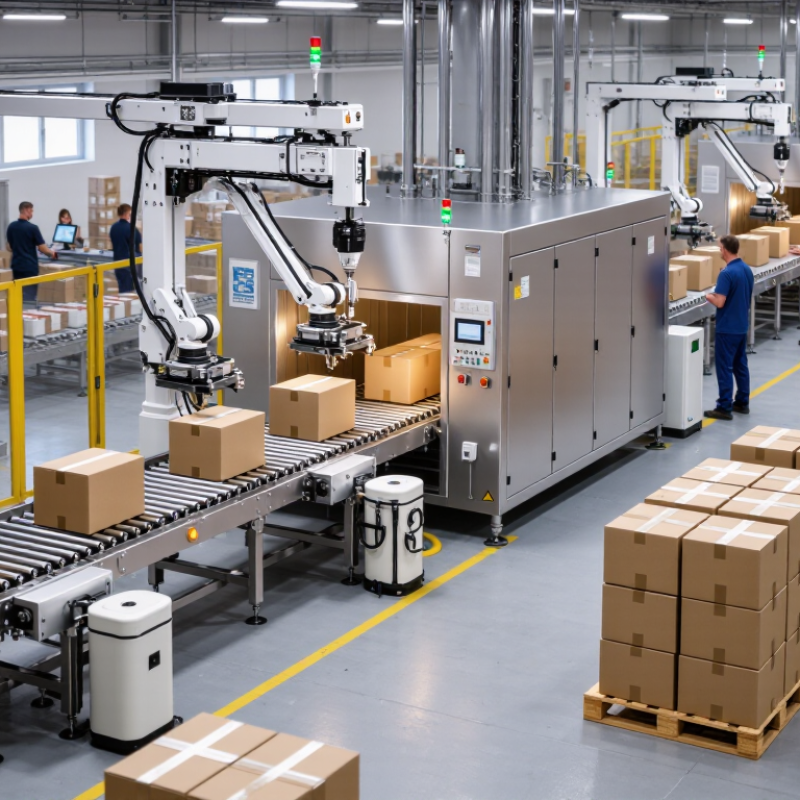
A case packer is a packaging machine that groups products and loads them into shipping cases. It may erect cartons, place items, close flaps, and apply adhesive or tape. The details matter. A loose bottle pattern can damage products before they reach a warehouse.
Manufacturer selection matters because the machine becomes part of your daily production system. PMMI’s 2024 industry analysis highlights labor shortages, flexible automation, and faster changeovers as major packaging priorities. A suitable case packer should match product dimensions, case styles, line speed, and available floor space. It should also allow operators to clean and adjust it without unsafe shortcuts.
Automation demand is measurable. The International Federation of Robotics reported 541,302 industrial robots installed worldwide in 2023, a 10% increase from 2022. That growth supports careful automation investment, not automatic purchasing. During factory trials, buyers should test real products, damaged cartons, speed changes, and restart procedures. A polished demonstration can hide practical weaknesses. Service response, spare-parts availability, training, and software support deserve equal attention. Total cost includes downtime, waste, energy use, and changeover labor. I have seen fast equipment disappoint when its controls were difficult to understand. A slightly slower machine may perform better if operators can correct problems quickly. Supplier references should be checked, but they are not proof of future results. The strongest decision combines measured trials, documented requirements, and honest review of operating risks.
Case packer selection depends on the product, carton style, and required production speed.
A machine that suits canned goods may damage flexible pouches. Real packaging trials reveal these differences quickly.
Vertical case packers work well for products loaded from above, such as bottles, jars, and rigid containers. They often use compact floor space and straightforward changeovers. Horizontal case packers handle bags, cartons, and flow-wrapped items more gently. Their side-loading motion can protect unstable products during packing.
For mixed product sizes, robotic case packers provide flexible pick-and-place control. Vision systems can check orientation before loading each case. This option suits operations with frequent format changes, but programming and maintenance require skilled technicians.
Wraparound case packers form cases around grouped products. They can reduce material use, though precise carton feeding becomes critical.
The right case packer should match case dimensions, product weight, sealing method, and line speed. Ask suppliers for sample runs using your actual products. Small differences in friction can affect alignment.
I have seen fast machines lose efficiency during repeated changeovers. Speed alone can mislead.
Consider operator access, cleaning routines, spare parts, and safety guarding.
A reliable machine should provide clear fault messages and measurable performance data. Leave room for future packaging changes. That decision is easy to underestimate.
Comparing case packer manufacturers worldwide requires more than checking speed figures. Start with your actual product, case size, packing pattern, and floor space. A machine rated for 30 cases per minute may slow down with fragile cartons or frequent format changes. Ask manufacturers to run your products during a factory acceptance test. Watch the infeed, pick-and-place motion, sealing quality, and changeover time.
Evaluate engineering depth and support reliability. Experienced manufacturers should provide clear drawings, utility requirements, safety documentation, and spare-parts lists. Check whether technicians can support your region and time zone. Request references from facilities with similar packaging volumes. Warranty length matters, but response time often matters more. I have seen buyers choose low prices, then face costly delays because one sensor was unavailable. That mistake is easy to repeat.
Tips: Compare total ownership cost, not only purchase price. Include installation, training, energy use, maintenance, tooling, and shipping. Ask for a written performance guarantee with measurable conditions. Review controls carefully, especially recipe storage and fault messages. A clean screen can save minutes every shift. Also, challenge optimistic production data. Real factories contain dust, uneven cartons, and rushed operators. Your comparison should reflect those imperfect conditions.
| Comparison Dimension | Typical Published Benchmark | High-Performance Target | Why It Matters to Global Buyers | Recommended Verification Method |
|---|---|---|---|---|
| Case-packing speed | 10–40 cases per minute for many automated applications | 30+ cases/min | Shows whether the machine can support current production volume and future capacity growth. | Request a factory acceptance test using the buyer’s actual product, case material, and packing pattern. |
| Product handling range | Common systems handle cartons, pouches, bottles, trays, bags, and multipacks. | At least 3 product formats | Broader handling capability reduces the need to purchase separate machines for multiple SKUs. | Confirm product dimensions, weight, orientation, surface condition, and changeover requirements in writing. |
| Case formats | Regular slotted cases, wraparound cases, tray-and-lid cases, and open-top cases are widely supported. | 2+ case styles | Case-format flexibility is important when serving different retailers, export markets, or packaging specifications. | Check whether each format requires additional tooling, a separate module, or manual intervention. |
| Case size flexibility | Typical systems provide adjustable case dimensions within a defined machine-specific range. | Tool-less adjustment | Wide adjustment capability can improve SKU flexibility and reduce downtime between production runs. | Compare the supplier’s minimum and maximum case length, width, and height with the buyer’s full SKU list. |
| Changeover time | Manual changeovers commonly range from approximately 15 to 60 minutes, depending on complexity. | Under 20 minutes | Shorter changeovers increase available production time and reduce labor during frequent product switches. | Ask for a timed demonstration covering format change, recipe selection, tooling adjustment, and restart. |
| Automation and controls | PLC-based control, touchscreen HMI, servo motion, recipe storage, and fault diagnostics are common features. | Digital recipe management | Advanced controls improve repeatability, operator usability, troubleshooting, and production data collection. | Review the HMI language options, remote-support functions, alarm history, and data-export capability. |
| End-of-line integration | Machines may integrate with conveyors, case sealers, palletizers, checkweighers, vision systems, and stretch wrappers. | Modular line integration | Integration compatibility affects line balance, footprint, labor requirements, and total installation risk. | Request a complete line layout showing interfaces, conveyor elevations, utilities, controls, and communication protocols. |
| Machine construction | Powder-coated carbon steel, stainless steel, and hybrid frames are commonly available. | Stainless contact areas | Material selection affects corrosion resistance, cleanability, hygiene, and service life. | Verify frame material, guarding construction, washdown rating, lubrication points, and access for cleaning. |
| Electrical compatibility | Industrial systems are commonly configured for regional voltage and frequency requirements. | Global electrical options | Correct electrical configuration helps prevent installation delays and reduces the need for local modification. | Confirm voltage, frequency, phase, control-panel standards, plug requirements, and local compliance documentation. |
| Safety compliance | Export-oriented equipment commonly includes guarding, emergency stops, interlocks, and risk-assessment documentation. | Applicable-market compliance | Safety conformity supports legal operation, insurance requirements, worker protection, and smoother customs clearance. | Request the applicable declaration, risk assessment, safety circuit details, and country-specific technical file. |
| Electrical consumption | Power demand varies substantially by speed, servo count, conveyors, glue systems, and integrated equipment. | Documented connected load | Energy data supports factory utility planning and long-term operating-cost comparison. | Compare connected load and average operating consumption under the same production conditions. |
| Service and spare parts | Support may include commissioning, operator training, remote diagnostics, preventive-maintenance schedules, and spare-parts packages. | Regional service coverage | Local technical support can reduce downtime, travel costs, and response time after installation. | Evaluate service response times, parts availability, technician locations, warranty terms, and escalation procedures. |
| Commercial evaluation | Total cost includes equipment, tooling, freight, installation, commissioning, training, maintenance, and utilities. | Lifecycle-cost quotation | The lowest purchase price may not provide the lowest operating cost over the machine’s useful life. | Request a line-item quotation with exclusions, delivery terms, acceptance criteria, warranty coverage, and annual maintenance estimates. |
| Benchmark values are general market ranges for comparison purposes. Actual performance depends on product characteristics, case materials, packing pattern, line configuration, local regulations, and validated factory testing. | ||||
Choosing a case packer requires more than comparing machine prices. Buyers should examine build quality, compliance evidence, and service capability before signing a contract. A reliable machine should handle the required carton sizes, product weights, and packing speeds without constant adjustment. Ask for test runs using your actual products and packaging materials. Inspect frame welds, guarding, sensors, conveyors, and changeover points. Small weaknesses often become expensive production delays.
Compliance should be documented, not merely promised. Request technical files, risk assessments, electrical specifications, and relevant conformity records for your target market. Check whether safety circuits, emergency stops, noise levels, and access panels meet local requirements. Documentation should match the delivered machine. It sounds obvious, but mismatched paperwork still appears in real projects. Buyers should also review factory inspection procedures, spare-parts availability, and software support. A supplier with experienced engineers can shorten installation and reduce operator errors.
Tips: Define acceptance criteria before requesting quotations. Record target speed, carton dimensions, product sensitivity, and cleaning needs. Ask for a remote support response time and an on-site service plan. Verify training materials with your operators, not only your engineering team. Keep a written list of exclusions. No checklist is perfect. A second technical review can reveal overlooked details, especially around utilities, floor space, and future format changes. Service quality is easiest to judge before purchase, so request references from comparable production environments and ask what went wrong during commissioning.
Choosing the right case packer supplier starts with your actual production conditions, not a glossy machine brochure. Share carton dimensions, product weight, packing patterns, line speed, and daily operating hours. A capable supplier should explain how the equipment handles variation, jams, and future format changes. Ask for documented cycle times from products similar to yours. See the machine run.
Supplier experience becomes clearer during technical discussions. Request installation records, maintenance schedules, operator training plans, and spare-parts availability in your region. Reliable manufacturers can describe sensor placement, changeover steps, guarding, and cleaning access without vague promises. They should also provide suitable compliance documents for your target markets. Small details matter.
A factory acceptance test can reveal more than a sales presentation. Send representative cartons and products, then measure sealing quality, uptime, noise, and changeover time. Ask what happens when cartons arrive slightly damaged or dimensions drift. The answer may expose the supplier’s practical experience. Do not judge only by the lowest quotation. A cheaper machine can create higher labor and downtime costs. Even a strong supplier may underestimate integration challenges, so confirm conveyor interfaces, software communication, and site responsibilities in writing. That extra caution is useful.