Choosing the right packaging machine begins with understanding your product, not browsing attractive equipment catalogs. A powder, liquid, fragile snack, or irregular part may require completely different handling methods. Product weight, shape, moisture, temperature, and filling accuracy all influence machine performance. Details matter.
In real production environments, small weaknesses become expensive problems. A poorly matched sealing unit may create wrinkled film, leaking pouches, or frequent line stoppages. An oversized machine can waste floor space, energy, and valuable capital. I have seen teams focus on speed while overlooking changeover time, cleaning access, and operator training. Those choices often appear efficient during demonstrations. They may perform differently after several weeks of daily use.
A reliable evaluation should compare output requirements, package materials, safety features, maintenance support, and future expansion plans. Ask suppliers for test results using your actual product and packaging film. Check whether replacement parts are available locally and whether technicians can respond quickly. Review technical documentation carefully, including accuracy tolerances and recommended operating conditions. Independent industry standards and qualified engineering advice can strengthen the decision.
No selection is perfect. A useful packaging machine balances productivity, quality, flexibility, and total ownership cost. Buyers should also consider real working conditions, such as dust, humidity, limited space, and changing product sizes. Measure twice. Then invest with evidence, not promises.
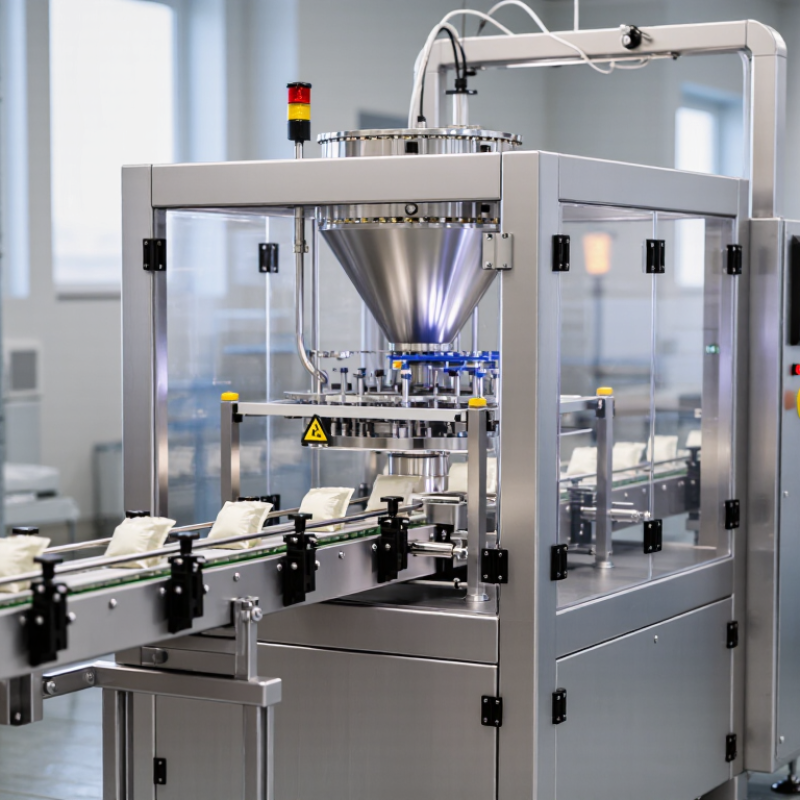
Before comparing packaging machines, define the product clearly. Record its shape, weight, dimensions, temperature, and surface condition. Powders, liquids, fragile goods, and irregular items behave differently during filling and sealing. A product that changes viscosity during a shift may need different controls than a stable product. Small details matter.
Next, describe the package rather than relying on a sample photo. Specify the material, pouch or container dimensions, seal width, closure type, and acceptable appearance. Note whether the package must resist moisture, light, pressure, or rough transport. Test several packaging samples, because one successful trial can create false confidence. I have seen teams approve a machine using clean, dry samples, then struggle when dust enters the sealing area.
Throughput requirements must reflect real production, not an optimistic target. Calculate the required units per minute, operating hours, product changeovers, cleaning time, and expected downtime. Leave room for maintenance and operator learning. A machine rated for 100 units per minute may produce far less with frequent size changes. Measure everything.
Ask for documented test results using your actual product and packaging materials. Check dosing accuracy, seal strength, rejection rates, adjustment time, and operator access. Review safety features, spare-part availability, training, and service response procedures. These factors affect dependable output more than a headline speed. I once underestimated changeover time; the calculation looked efficient, but the daily schedule did not. That mistake is worth examining before any purchase decision.
Machine speed should support your OEE target, not simply impress on a specification sheet. OEE combines availability, performance, and quality. An 85% OEE is widely viewed as a world-class benchmark, but it requires stable production conditions. A machine rated at 120 packs per minute may deliver less in practice. Changeovers, short stops, material jams, and rejected packs reduce real output.
During equipment trials, measure sustainable speed over a complete shift. Record startup losses and cleaning time. Check whether operators can refill materials without stopping the line. A practical calculation is simple: multiply planned production time by the target OEE and required pack rate. If you need 100 good packs per minute at 85% OEE, the machine must provide enough capacity above that level. Avoid choosing a machine that runs at its maximum speed every hour.
Our first speed estimate was too optimistic. We ignored film changes and small sensor delays. That mistake showed why factory data matters more than laboratory figures. Ask for test results using your product, packaging material, and sealing conditions. Inspect quality at higher speeds, not only output counts. Faster is not better when seal failures increase. Leave room for maintenance, product variation, and operator learning. A modestly slower machine can achieve higher OEE when it runs consistently. Perfect calculations are rare. Use measured evidence, then review the target after installation.
How to Choose the Right Packaging Machine?
When choosing a packaging machine, fill accuracy deserves practical testing, not only a brochure review. A 0.2-gram variation can affect dosage, material cost, and product consistency. Test the machine with your actual product, including powder, liquid, or irregular components. Record results across several batches. One perfect trial proves very little.
Seal integrity is equally important. Check temperature, pressure, dwell time, and seal width during production trials. A clean-looking seal can still contain weak areas. Use visual inspection, peel testing, burst testing, or dye penetration when appropriate. Watch the machine after extended operation. Heat drift and worn sealing parts may appear later. Small defects matter.
For sterile medical packaging, ISO 11607 compliance must guide the evaluation. The machine should support a validated sterile barrier system, suitable materials, controlled sealing parameters, and documented process records. Compliance does not come from the machine alone. Packaging design, material selection, installation qualification, operational qualification, and performance qualification all require evidence. Ask for traceable data, calibration records, and clear change-control procedures. Operators also need practical training, because a technically capable machine can produce unreliable results when settings are misunderstood. That part is often underestimated. A rushed validation plan may look efficient, but it can create expensive questions during audits. Review the process again.
| Evaluation Area | Key Metric | Practical Screening Target | Recommended Test or Reference | Why It Matters |
|---|---|---|---|---|
| Fill Accuracy | Mean fill-weight error | Preferably within ±1.0% of the target weight for stable, free-flowing products; establish a product-specific specification before purchase. | Run a statistically meaningful trial using the actual product, package format, target weight, and production speed. Use calibrated scales. | Reduces giveaway, underfill risk, customer complaints, and variation in downstream sealing performance. |
| Fill Accuracy | Individual-unit consistency | All units should remain within the approved product specification; do not rely only on average batch weight. | Review standard deviation, minimum/maximum values, and capability results such as Cpk where a specification limit is defined. | An acceptable average can conceal individual packages that are overfilled or underfilled. |
| Fill Accuracy | Dose repeatability at rated speed | Performance should remain within the approved limits during startup, normal operation, speed changes, and low-hopper conditions. | Conduct factory and site acceptance tests at the intended operating speed and at representative product temperatures and viscosities. | Some dosing systems perform well at low speed but lose accuracy under actual production conditions. |
| Seal Integrity | Seal strength | Meet the validated minimum seal-strength specification for the selected film, tray, pouch, or lidstock; there is no universal ISO 11607 seal-strength value. | ASTM F88/F88M for seal-strength testing, using defined specimen width, peel speed, conditioning, and failure-mode criteria. | Confirms that the seal can withstand handling, distribution, and opening requirements without unacceptable channel leaks or material failure. |
| Seal Integrity | Leak and channel detection | No leaks or open channels in tested samples under the approved method and validated test sensitivity. | ASTM F2096 for gross leak testing or ASTM F2338 for nondestructive vacuum-decay leak testing, as appropriate for the package. | Detects defects that may not be visible during routine visual inspection. |
| Seal Integrity | Seal-window control | The validated temperature, pressure, and dwell-time window should be documented and monitored during production. | Perform process-development trials across the proposed operating range, followed by process qualification and routine monitoring. | A wider validated window improves robustness against film variation, line-speed changes, and equipment drift. |
| Seal Integrity | Seal contamination tolerance | The machine should prevent or reject seals contaminated by product, dust, moisture, or wrinkles wherever the application requires it. | Challenge testing with representative contamination levels and inspection of seal appearance and leak performance. | Product trapped in the seal area is a common cause of weak seals and package leakage. |
| ISO 11607 Compliance | Packaging-system suitability | The machine must consistently produce packaging that meets the defined requirements for materials, forming, sealing, and protection throughout the intended shelf life. | ISO 11607-1:2019+A1:2023 for materials and sterile-barrier systems; document product, package, and distribution requirements. | ISO 11607 evaluates the packaging system and its ability to maintain sterility, not merely the machine as a standalone product. |
| ISO 11607 Compliance | Packaging-process validation | Critical process parameters, operating limits, monitoring methods, deviations, and requalification intervals should be documented. | ISO 11607-2:2019+A1:2023 for forming, sealing, and assembly-process validation; use installation, operational, and performance qualification as applicable. | Provides objective evidence that the process repeatedly creates conforming packaging under specified conditions. |
| ISO 11607 Compliance | Distribution and aging performance | The completed package should maintain seal and barrier performance after simulated distribution and the defined real-time or accelerated aging program. | Use applicable ASTM package-integrity and strength methods, with distribution testing such as ASTM D4169 or another justified protocol. | A package that passes immediately after sealing may fail after vibration, compression, impact, or aging. |
| Machine Selection | Data integrity and traceability | Record fill settings, seal temperature, pressure, dwell time, alarms, rejects, recipe changes, and operator access where required by the quality system. | Review electronic records, audit trails, calibration controls, recipe management, and change-control procedures during qualification. | Supports investigation, repeatability, preventive maintenance, and documented evidence of process control. |
| Machine Selection | Inspection and reject capability | Include detection and automatic rejection for relevant faults such as missing product, incorrect weight, open seal, poor registration, or damaged packaging. | Verify detection capability using known-good and known-defective challenge samples at the planned line speed. | Prevents nonconforming packages from moving to subsequent operations or distribution. |
Evaluation note: The numerical targets above are procurement-screening benchmarks, not universal regulatory limits. Final acceptance criteria should be justified through product-specific trials, calibrated measurement systems, documented process validation, and the applicable requirements of the intended market.
Choosing the Right Packaging Machine
Choosing packaging machinery starts with your production reality, not a glossy specification sheet. Measure labor hours per shift, overtime, training time, and the cost of repeated manual handling. A semi-automatic machine may suit a small line with varied products and modest daily volume. It often keeps operators involved during feeding, inspection, and quick adjustments. That flexibility has value.
Higher automation can reduce staffing needs, but labor savings are only one part of the calculation. Record current output, stoppages, waste, and changeover minutes for each product format. Then compare those figures with the machine’s purchase price, installation, maintenance, utilities, and operator training. A faster line may still lose money if format changes consume two hours each morning. Fast changeovers matter most when batches are short or product variety is high. Use a simple ROI model: annual measurable savings divided by total investment. Include conservative assumptions.
In real facilities, the best choice is often a balanced automation level. Test the machine with your actual materials, package sizes, and busiest shift conditions. Watch how operators clear jams, replace film, and recover after an interruption. These details expose costs that brochures rarely show. I have seen teams over-automate because projected labor savings looked impressive. The equipment later sat idle during frequent product changes. That is a useful warning: projected ROI is not proven ROI. Recheck the model after a pilot run, and allow room for imperfect data.
Safety and hygiene should be tested on the production floor, not judged from photographs. The World Health Organization reports that contaminated food causes about 600 million illnesses annually. Choose machines with guarded moving parts, emergency stops, tool-free access, and cleanable surfaces. Product-contact areas should avoid cracks, exposed threads, and trapped moisture. Stainless steel alone is not enough. Ask for sanitation procedures, material certificates, and documented validation tests. A small residue near a seal can become a serious contamination risk.
Energy use deserves measurement before purchase. The U.S. Department of Energy states that compressed-air systems can waste 20% to 30% of their output through leaks. Request electricity and air-consumption data at your expected speed, not only at ideal settings. Check standby modes, servo efficiency, heater insulation, and pneumatic leak controls. Measure actual consumption during changeovers. Real factories rarely run perfectly. That matters.
Supplier support can determine whether a machine remains productive after installation. PMMI industry reports repeatedly identify labor shortages and technical skills gaps as major packaging challenges. Confirm remote diagnostics, spare-parts availability, training hours, and response targets in writing. Ask to speak with a current user, preferably one running similar materials. A polished demonstration proves little. I would also calculate downtime costs for the first year. The cheapest quotation may become expensive when support is slow. Recheck every assumption before signing.