Top Food Packaging Equipment Trends to Watch in 2023
As we move into 2023, the food packaging equipment industry is poised for significant advancements that will reshape how products are packaged and delivered. With the growing emphasis on sustainability, efficiency, and technological innovation, food packaging equipment is at the forefront of these trends. As businesses seek to meet consumer demands for eco-friendly solutions and heightened quality assurance, the evolution of food packaging equipment is critical to ensuring both product integrity and environmental responsibility.
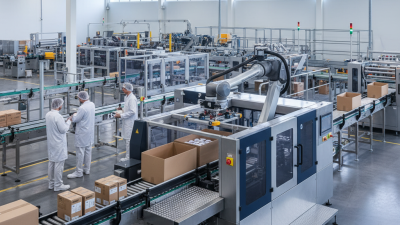
One of the key trends to watch this year is the rise of automation in food packaging equipment. Automated systems are becoming increasingly sophisticated, reducing labor costs while enhancing precision and speed in packaging processes. Additionally, the integration of smart technology allows for real-time monitoring and data collection, enabling manufacturers to optimize production workflows and minimize waste. Furthermore, advancements in materials and designs focused on sustainability are leading to the development of packaging solutions that are both effective and environmentally friendly.
In conclusion, the food packaging equipment landscape in 2023 is characterized by a commitment to innovation and sustainability. As the industry evolves to meet new challenges and opportunities, food producers must remain informed and adaptable, harnessing the power of these trends to improve their operations and satisfy consumer expectations. Understanding these shifts will be pivotal in ensuring the success and longevity of food packaging solutions in a rapidly changing marketplace.
Emerging Technologies in Food Packaging Equipment for 2023
As we look into 2023, the world of food packaging is embracing a shift towards innovative technologies aimed at enhancing sustainability and efficiency. One of the most notable trends is the integration of smart packaging solutions. These advanced systems can include sensors that monitor freshness, track temperature, and even detect spoilage. The ability to provide real-time data not only aids in food safety but also minimizes waste, making it a game-changer in the industry.
Another emerging technology in food packaging equipment is the use of biodegradable and compostable materials, which are becoming increasingly popular. With consumers becoming more environmentally conscious, packaging that breaks down naturally helps companies align with their eco-friendly values. Utilizing these materials can significantly reduce a company’s carbon footprint and appeal to a wider audience that prioritizes sustainability in their purchasing decisions.
Tips: When considering new packaging technologies, invest in solutions that not only cater to your current needs but also have the flexibility to adapt to future demands. Additionally, always communicate the benefits of your packaging choices to consumers, as transparency fosters trust and loyalty. Finally, keep an eye on regulatory changes, as staying ahead can ensure compliance and market competitiveness.
Sustainability Trends in Food Packaging Solutions
The food packaging industry is undergoing a significant transformation as sustainability becomes a central focus. According to a report by Smithers, the global sustainable food packaging market is projected to reach $800 billion by 2025, driven by an increasing consumer preference for eco-friendly materials. This trend is fueled by heightened awareness of environmental issues, with 66% of global consumers willing to pay more for sustainable products, as highlighted in a recent Nielsen survey. These statistics underscore the urgency for manufacturers to pivot towards biodegradable, recyclable, and compostable packaging solutions that significantly reduce their carbon footprint.
In 2023, several innovations are emerging in sustainable food packaging solutions. Plant-based materials are gaining traction; for instance, packaging derived from corn starch and other bioplastics is proving to be an effective alternative to traditional plastics. Furthermore, companies are investing in advanced technologies, such as edible packaging and smart packaging systems that extend shelf life while minimizing waste. With global regulations tightening around single-use plastics, the food packaging sector is compelled to adapt rapidly, not just to comply with regulations, but to meet the growing expectations of eco-conscious consumers. As a result, sustainability is no longer a trend but a necessity for the future of food packaging.
Top Food Packaging Equipment Trends to Watch in 2023
| Trend |
Description |
Impact on Sustainability |
Adoption Rate (%) |
| Biodegradable Materials |
Using materials that can break down naturally to reduce landfill waste. |
Reduces environmental impact by decreasing plastic waste. |
35% |
| Smart Packaging |
Integration of technology to monitor food freshness and safety. |
Minimizes food waste through better tracking. |
25% |
| Reusable Packaging |
Designing packs that can be used multiple times by consumers. |
Lowers demand for single-use packaging materials. |
20% |
| Minimalist Packaging |
Reducing the amount of packaging material used while still protecting products. |
Conserves resources and reduces waste. |
40% |
| Water-Based Inks |
Switching from solvent-based to water-based inks for printing on packaging. |
Less harmful to the environment and reduces VOC emissions. |
15% |
Automation and Robotics in Food Packaging Processes
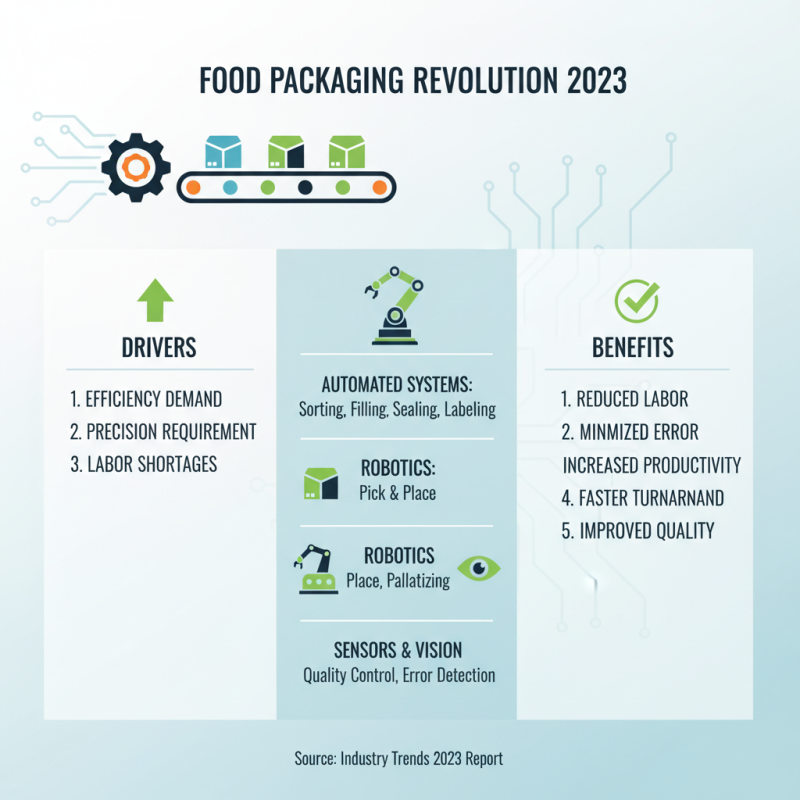
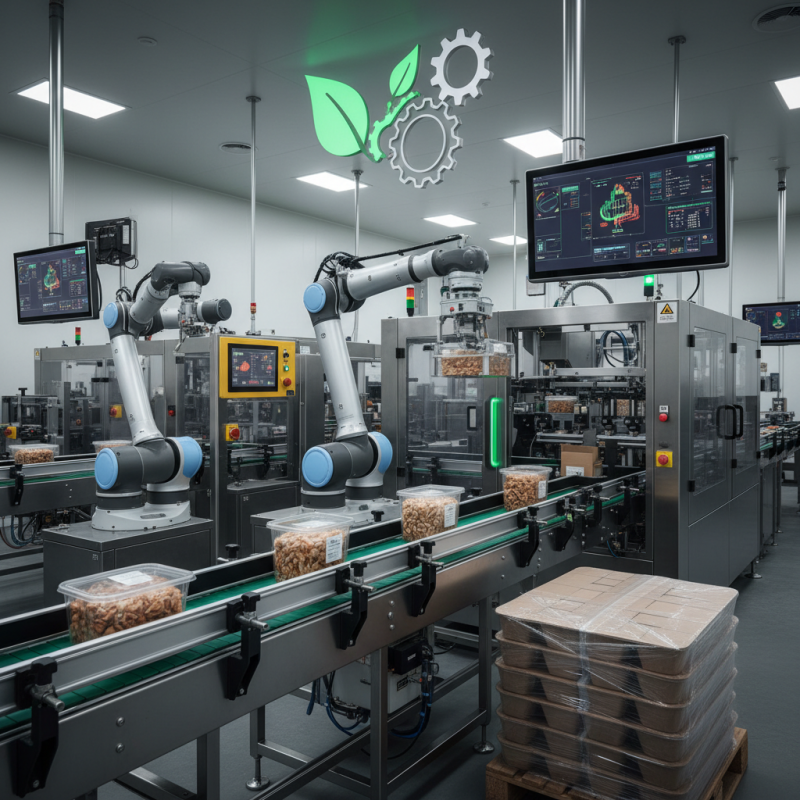
The integration of automation and robotics in food packaging processes is revolutionizing the industry in 2023. As manufacturers face growing demands for efficiency and precision, they are increasingly turning to advanced technologies to streamline operations. Automated packaging systems reduce the need for manual labor, minimize human error, and enhance overall productivity. These systems are designed to handle various packaging tasks, from sorting and filling to sealing and labeling, ensuring a faster turnaround time and improved product quality.
Robotic solutions, in particular, have gained significant traction in food packaging. With the capability to perform repetitive tasks with high precision, robotic arms can manage delicate items without compromising quality. They can adapt to a variety of product shapes and sizes, making them versatile for diverse packaging requirements. Additionally, the use of machine learning algorithms allows these systems to optimize packaging processes in real-time, thus reducing waste and improving resource utilization. As technology continues to advance, we can expect even greater innovations that will further enhance the safety and efficiency of food packaging operations.
Smart Packaging Innovations Enhancing Food Safety
In 2023, the food packaging industry is witnessing a significant shift towards smart packaging innovations that prioritize food safety. Recent reports indicate that the global smart packaging market is projected to reach approximately $37 billion by 2026, driven by advancements in technology and a growing emphasis on safety standards. These innovations encompass a variety of solutions, including sensors that monitor temperature and humidity, ensuring that perishable food items remain within safe environmental conditions throughout their supply chain journey.
One notable trend is the integration of digital technologies such as QR codes and NFC tags, which allow consumers to track the freshness of their food. A study from Transparency Market Research highlights that such interactive packaging solutions not only enhance consumer engagement but also provide critical data for retailers regarding stock management and expiration dates. Furthermore, the shift towards sustainable packaging materials, including biodegradable options embedded with smart technology, is gaining traction. These developments not only contribute to a reduced environmental footprint but also enhance the ability to detect contamination or spoilage, ultimately bolstering food safety measures in an increasingly complex food distribution landscape.
Top Food Packaging Equipment Trends in 2023
This chart illustrates the key food packaging equipment trends of 2023. Notable trends include the rise of smart packaging and automation, which are significantly enhancing food safety and operational efficiency in the industry.
Consumer Preferences Driving Packaging Design in 2023
In 2023, consumer preferences are significantly shaping the landscape of food packaging design. As health consciousness continues to rise, consumers are increasingly seeking packaging that emphasizes freshness and sustainability. Eco-friendly materials are no longer just a trend; they have become a priority for eco-conscious consumers who are choosing products with minimal environmental impact. This demand for sustainable packaging solutions is driving manufacturers to explore innovative materials, such as biodegradable plastics and recyclable composites, that resonate with the values of their target audience.
Moreover, aesthetics and convenience play a critical role in packaging design this year. Visually appealing designs are essential not only for attracting attention on shelves but also for enhancing the overall consumer experience. Packaging that is easy to open, resealable, or single-serve is gaining traction among busy consumers looking for practicality without sacrificing quality. This focus on user experience ensures that brands can meet the evolving needs of consumers, paving the way for more functional and engaging packaging solutions that align with modern lifestyles. As these trends continue to unfold, the food packaging industry is poised to adapt and innovate in response to the dynamic market demands.