
10 Essential Tips for Choosing the Right Industrial Packaging Machine?
Choosing the right industrial packaging machine is crucial for many companies. In 2022, the global packaging machinery market reached $43 billion, growing annually by over 5%. Packaging efficiency directly impacts productivity and cost management. An inappropriate choice can disrupt operations and lead to significant financial losses.
Several factors influence the selection process of industrial packaging machines. Companies must consider production speed, machine adaptability, and package types. For example, a machine suited for liquid packaging may not perform well in handling dry products. Furthermore, emerging technologies are shifting the landscape. Automated solutions can reduce labor costs yet may require high initial investments. It's essential to balance capabilities with budget constraints.
Reflecting on company needs is vital. A decision based solely on price can lead to subpar performance. Evaluating past machinery failures can provide valuable insights. Understanding specific operational challenges will enhance decision-making. Overall, making the right choice entails deeper consideration beyond the surface of machinery features.

Understanding Your Packaging Needs and Goals
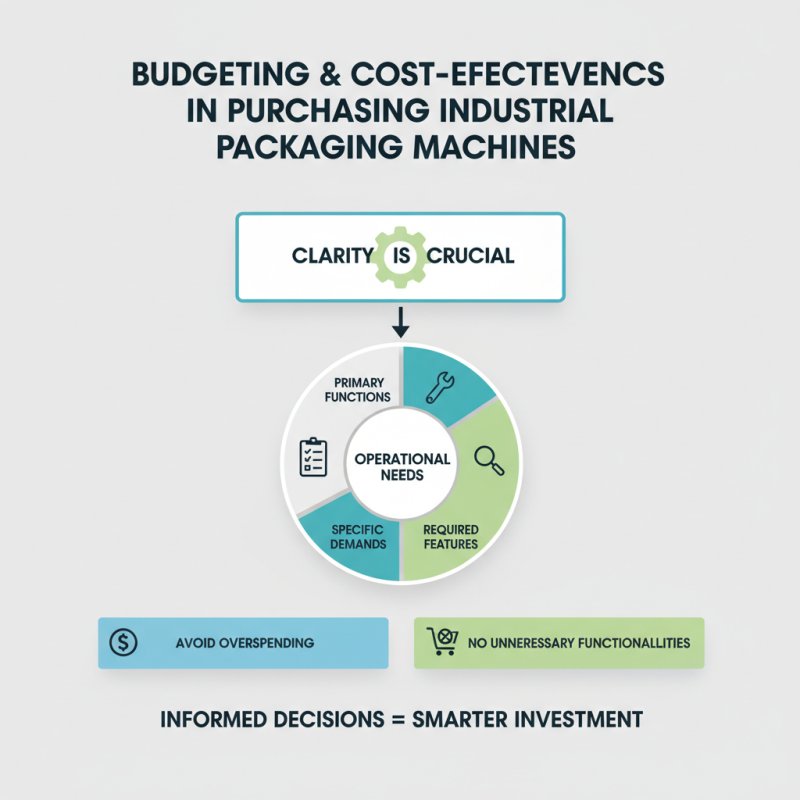
Choosing the right industrial packaging machine starts with understanding your unique packaging needs and goals. Assess the specific dimensions of your products. Are they large, small, or oddly shaped? Each characteristic affects machine selection. Consider the types of materials you frequently use. Some machines excel with plastics, while others work best with cardboard. Factor in the volume of production. Are you producing small batches or mass quantities? This will guide your decision between automation and manual options.
Evaluate how your packaging aligns with your brand’s identity. Packaging should reflect your brand values. For example, eco-friendly materials may be a priority for some businesses. Think about the desired shelf life of your products. Shorter shelf life may require more protective packaging. Delve into the space you have for the machinery. Space constraints can limit options, leading to compromises.
It’s essential to engage in some trial and error. Maybe a machine doesn’t perform as expected. These moments can offer valuable insights into improving processes. Continuous reflection on goals and performance will help you adapt as your business grows. Balancing technical specifications and practical applications can often lead to unexpected surprises. Stay flexible and open to adjustments.
10 Essential Tips for Choosing the Right Industrial Packaging Machine
| Tip | Consideration | Importance Level | Notes |
|---|---|---|---|
| 1. Assess Your Product Specifications | Understand the product dimensions and weight | High | Key to choosing suitable machinery |
| 2. Determine Your Production Volume | Know the output required per hour/day | High | Aligns machinery with demand |
| 3. Understand Packaging Materials | Assess the materials used for packaging | Medium | Compatibility with machine is essential |
| 4. Evaluate Automation Needs | Decide between manual, semi-automatic, or fully automatic | High | Influences cost and efficiency |
| 5. Consider Space and Layout | Assess available factory floor space | Medium | Ensure optimal workflow |
| 6. Review Regulatory Requirements | Know packaging regulations for your industry | High | Compliance is critical |
| 7. Investigate Maintenance and Support | Consider ease of maintenance and support services | Medium | Minimize downtime with good support |
| 8. Analyze Cost and ROI | Evaluate total costs versus expected return | High | Financial feasibility is key |
| 9. Seek Recommendations | Get feedback from industry peers | Medium | Trust in user experiences |
| 10. Test Before Buying | Request product demonstrations | High | Ensure it meets your needs |
Related Posts
-
Top 10 Packer Machines: Best Choices for Efficient Packaging Solutions in 2023
-
How to Choose the Right Packaging Equipment for Your Business Needs
-

How to Choose the Right Packaging Machine for Your Business Needs
-
2025 How to Choose the Best Packaging Machine for Your Business Needs
-

How to Choose the Right Case Packer Machine for Your Packaging Needs
-

2025 How to Choose the Best Packaging Machine for Your Business Needs